The HydroThermal Reactor: Where Science Meets Scalable Green Power
KiNRG’s patented HydroThermal Reactor is designed to deliver cost-efficient, zero-emission power — engineered for large-scale deployment.


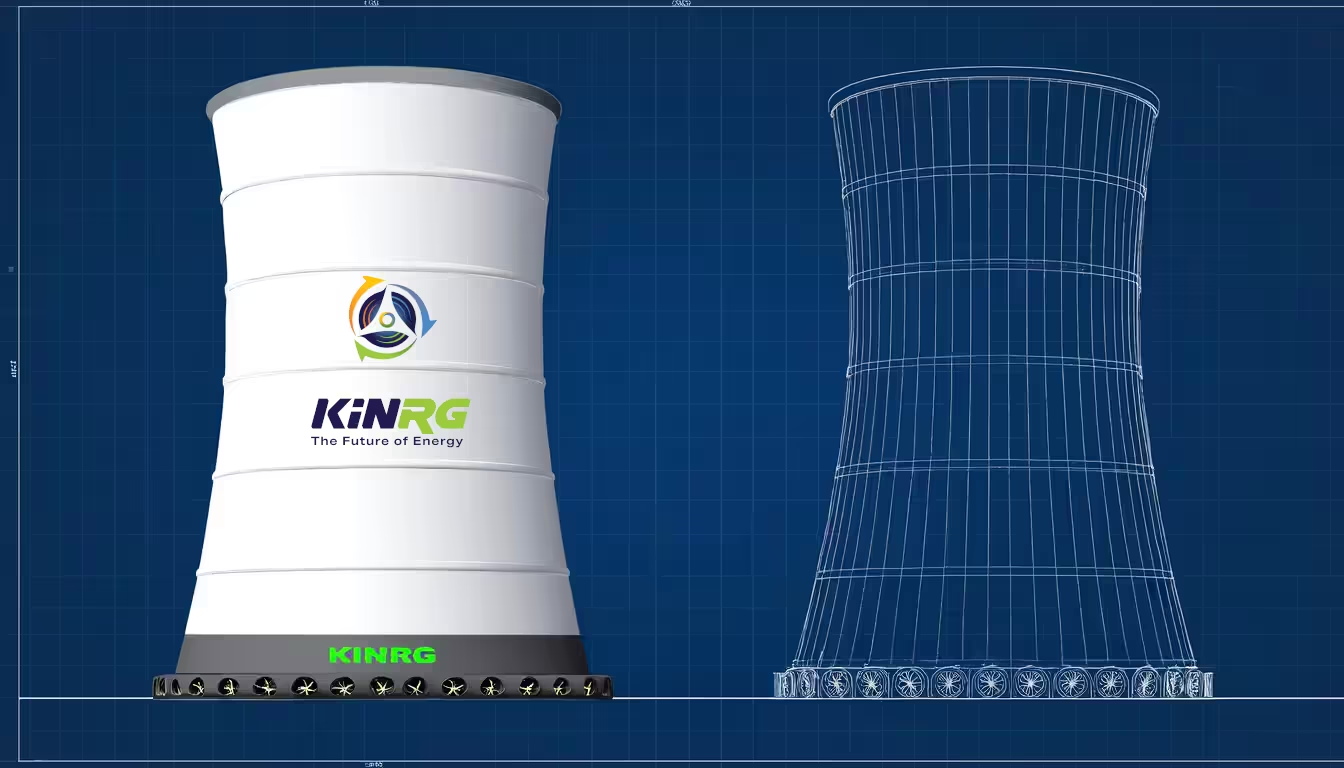
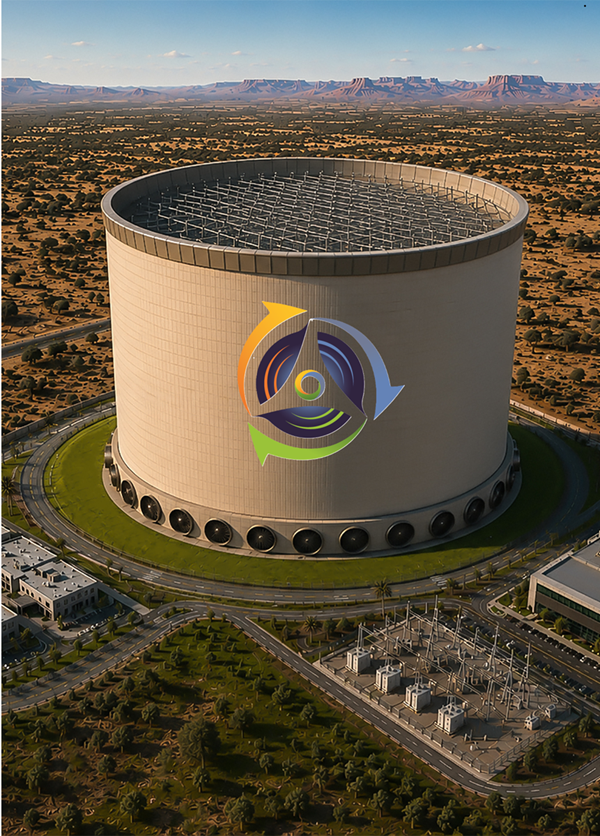
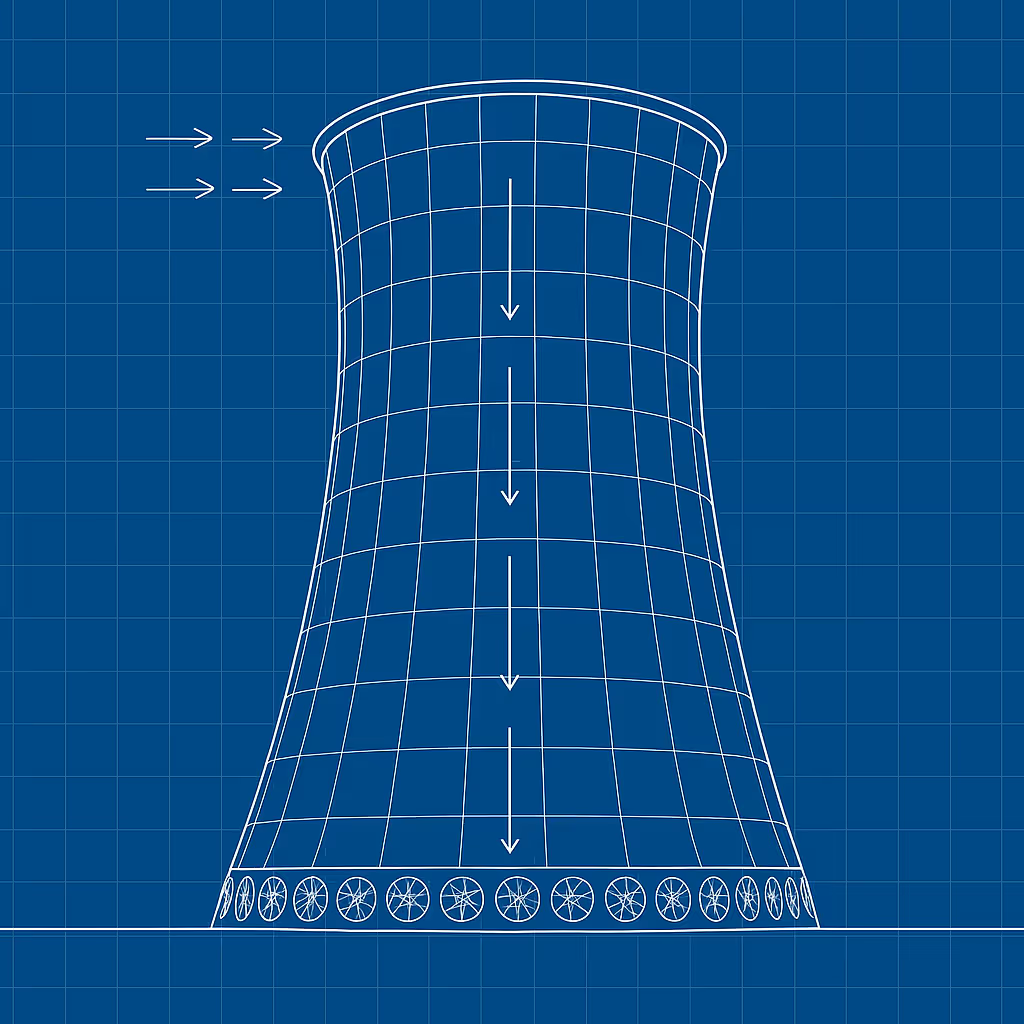
KiNRG's large HydroThermal Reactor is a concrete structure with a water injection system at the top that releases measured water droplets through a header.
These droplets evaporate near the top due to sun-warmed air, cooling the air inside the reactor. As it cools and becomes denser, the air descends, reaching speeds over 50 mph.
This colder, damp, dense air flows into tunnels around the base, reaching wind speeds of over 100 mph.
Patented turbines inside these tunnels convert the wind's kinetic energy into green electricity.
KiNRG’s HydroThermal Reactor is more than a breakthrough in sustainability — it’s a high-impact solution for both the planet and forward-thinking investors. By merging zero-emission energy production with operational efficiency, we unlock value across environmental, economic, and infrastructural fronts.

A deeper look at the science, scalability, and sustainability behind the Large Reactor.
Clean energy that performs like an asset and scales like infrastructure
No combustion and no emissions
Compared to wind, solar, or nuclear
24/7 power, no reliance on sun or wind
On-demand generation without storage risks
KiNRG’s HydroThermal Reactor is protected by six U.S. patents, covering core systems in aerodynamic control, energy conversion, structural design, and storage. These innovations not only define the reactor’s engineering advantage - they also create defensible long-term value for partners and investors.
USA (Patent #8,120,191 – Issued 2/21/2012)
This patent covers a novel hydraulic system capable of maintaining high efficiency hydraulic to electric conversion under a wide variance of wind speeds, as coupled to a plurality of wind turbines in wind tunnels. USA
USA (Patent #8,643,204 B2 – Issued 2/04/2014)
This patent enhances and broadens previously issued Patent #8120191. USA
USA (Patent #10,989,171 – Issued 4/27/2021)
This patent relates to energy storage, and more specifically to the methods and apparatus to harness energy when natural energy sources are not readily available, including the storage and utilization of said energy. USA
Morocco (Patent #65,031 - Issued 2025)
This patent covers the multi-stage wind power extractor features, including the circular tunnel with an expanding diameter and multiple turbines aligned inside. Each turbine has blades, a controller, and a motor. The controllers engage the turbines based on wind speed, and the motors power generators to extract energy. Morocco
USA (Patent #8,517,662 B2 – Issued 8/27/2013)
This patent covers a structure for producing electricity, specifically a Tower capable of adding moisture at the top of the structure to hot -dry air so as to generate a downdraft of wind within the interior of the Tower, vanes coupled to the exterior of the Tower that at least partially define a plurality of elongated pockets to the exterior of the Tower, and flaps located to redirect the incident wind downwards into tunnels to convert wind to electricity. USA
USA (Patent #8,727,698 B1 – Issued 5/20/2014)
This patent claims are targeted to represent the advantages of the new Tower structural shape, the configuration of the Tower walls, their composition as well as the wall thicknesses for a given height, along with more efficient construction methodology and enhanced wind force resistance over prior Tower designs. USA
USA (Patent #11,486,359 - Issued 11/01/2022)
This patent covers the multi-stage wind power extractor features, including the circular tunnel with an expanding diameter and multiple turbines aligned inside. Each turbine has blades, a controller, and a motor. The controllers engage the turbines based on wind speed, and the motors power generators to extract energy. USA
Kuwait (9/1/2025)
This patent covers the multi-stage wind power extractor features, including the circular tunnel with an expanding diameter and multiple turbines aligned inside. Each turbine has blades, a controller, and a motor. The controllers engage the turbines based on wind speed, and the motors power generators to extract energy. Kuwait
Invest in scalable, zero-emission technology redefining America’s energy independence. Partner with KiNRG today.

It takes 4.5 MW to pump the water to the top of the HTR.
The HTR has a zero carbon foot print.
The HTR required warm/hot air. After sunset, the earth cools from the ground up. Cooler hours between midnight and sunrise dimmish the production. That’s why the lowest hours of night time winter hours determine the base load capacity which targets 200 Megawatts.
The need for AI data centers has created a demand for energy that far exceeds existing generating capacity. Our aging electrical grid system lacks the transmission capacity even if we could build enough new power plants fast enough to meet demand. Consequently, co-locating the HTR’s on the same site with the data center eliminates the need for large power plants and by passes the need for the grid. That’s called a “Behing the Meter” solution because the data center is independent from the grid.
Southern California to western Texas approximately 100 miles from the Mexico border as well as the Mexican side of the border is suitable. Most of Australia works as well. The most ideal locations range from Morocco through Egypt as well as all across the Mid-Eastern Countries and into Western India.
KiNRG considers the cost of the HTR to be proprietary. The Company plans to own the HTR’s and sell energy to data centers under long term fixed price contracts. The HTR’s are projected to be very profitable assuming the current rates for electricity.
The reactor is concrete and rebar. Although concrete structures are designed for 50 years, it would be unusual for their life not to exceed 75 years.
The generators, when properly maintained should perform for 30 years before replacement. The 36 turbines have a useful life of 20 years and each of the 3 blades per turbine are replaceable. Pumps should be changed out every 10 years with spares which most often can be refurbished.
If drawing water from a well, independent third-party studies conclude that the HTR simply borrows water, captures and recirculates the majority of the water, and discharges cold, damp and vaporized air from its tunnels which hydrates the land and surrounding environment. The HTR will not create a plume or discharge water. The fact that the HTR filters the water means that it actually returns the borrowed water cleaner than when originally drawn.
If drawing water from a well, independent 3rd party studies conclude that the HTR simply borrows waters, captures and re-circulates the vast majority of the water and discharges only cold damp air from its tunnels which irrigate the surrounding land and replenish the aquifer. The HTR does not create a plume or discharge water. The fact that the HTR filters the water means that it actually returns the borrowed water cleaner than when originally drawn.
The HTR is an ideal power solution for data centers. Data centers require constant power 24/7/365. Traditional renewable energy from solar or wind produces energy only when the Sun shines or the Wind blows.
The evaporating cooler air falls at a scientifically predictable speed to the bottom of the reactor where it is forced into smaller tunnels surrounding the base of the Reactor. Inside each tunnel is a 3-bladed turbine that spins and powers hydraulic pumps which circulate hydraulic fluid in a closed loop system that spins generators in a separate generating room .Generators send the power to the project’s own substation which provide power to the co-located data center and can direct the excess day time power over and above the base load to the grid.
Not yet, but KiNRG built a pilot project as a proof-of-concept 400’ tall HydroThermal Reactor for the U.S. Department of Energy which verified the evaporative process and validated the algorithms in the KiNRG program model.